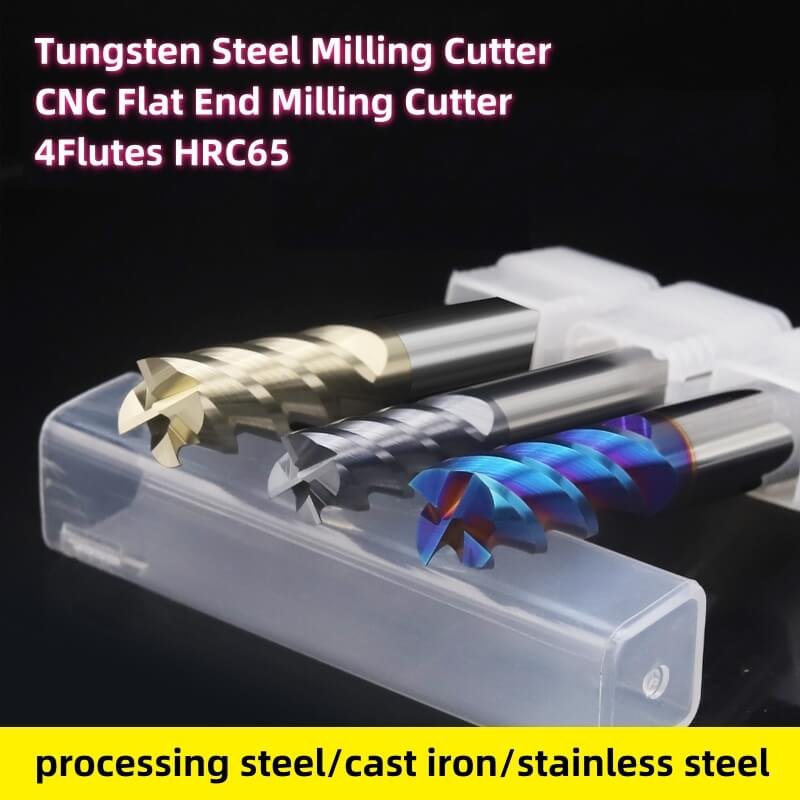
What is a milling cutter?
Simply put, a milling cutter is a rotating, multi-edged cutting tool that effectively removes material from a workpiece and creates the desired shape and surface quality. It is widely used on various CNC machining centers, from simple planar machining to complex 3D mold making, all thanks to the milling cutter working silently behind the scenes.
Milling cutters have a wide range of applications:
Machining flat surfaces: such as metal casings and mold bottoms, milling cutters can quickly create smooth surfaces.
Grooving/Creating grooves: whether keyways, T-grooves, or guide grooves.
Contour milling: cutting out external or internal contours according to a design path.
Shaping: including chamfering, radius corners, bevels, 3D curved surfaces, and other complex features.
Different materials require different milling cutters.
Different workpiece materials, geometries, and tolerance requirements all necessitate different cutter selection criteria:
Aluminum is prone to tool sticking, requiring a sharp, chip-removing design.
Stainless steel is harder, requiring wear-resistant and coated tools.
Precision machining requires controlling the number of cutting edges and angles to avoid burrs and chatter marks.
What types of end mills are there? Introduction and application suggestions for 8 common end mills
There are many types of end mills, but they can be broadly categorized into 6 main types.
If you are a CNC engineer or machining technician, these basic classifications are the core of your daily tool selection.
Instead of memorizing a bunch of technical terms, start by asking yourself, “What do you want to machine?” and “What cutting effect do you need?”
Below, we’ve compiled the characteristics and application scenarios of each common end mill, along with recommended products from Mingjiu, to help you quickly choose the right tool.
- End Mills
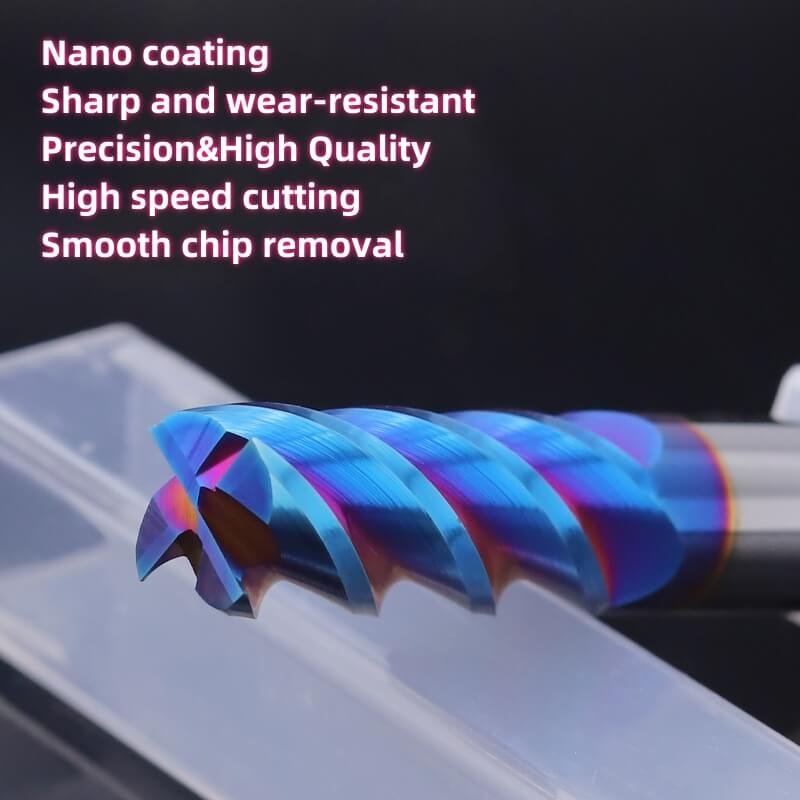
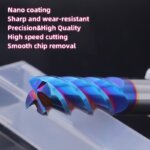
End mills are the foundation of CNC machining. Whether it’s keyway cutting, face finishing, or contour cutting, end mills can handle almost anything. The number of cutting edges, cutting edge length, and coating can be adjusted according to the material being machined and the feed rate.
Features: They have cutting edges on both the end face and the side face, allowing for simultaneous machining in all directions.
Common applications: grooving, planar shaping, contour machining; suitable for most metal processing applications.
2.Ball end mills(Ball Nose)
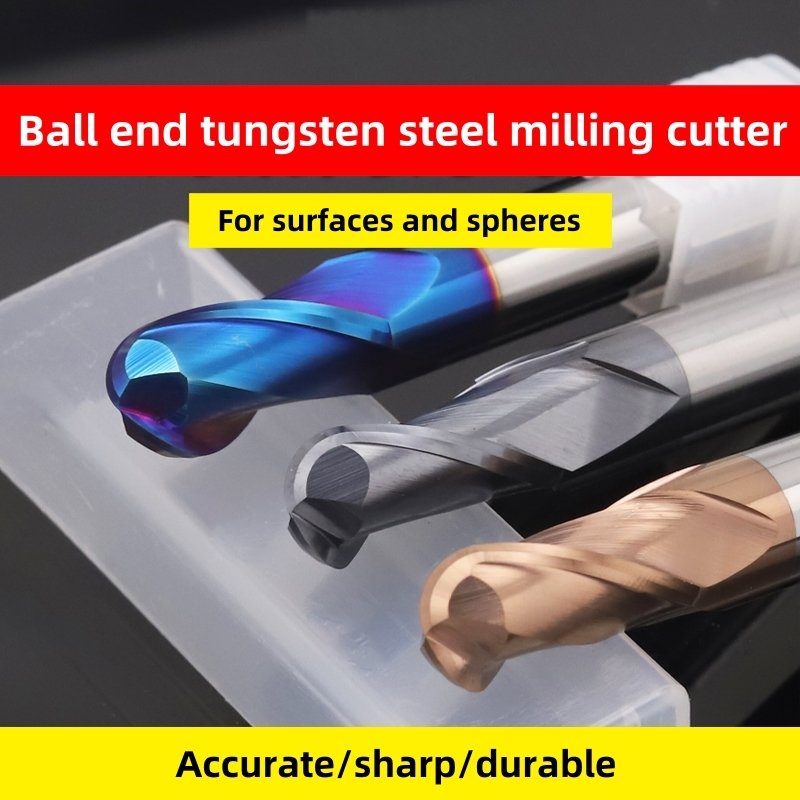
When machining complex 3D curved surfaces or models, rather than flat surfaces, ball end mills come in handy. Ball end mills allow you to create smooth undulations in the Z-axis direction, suitable for mold making, simulating curved surfaces, and trimming curved contours.
Features: Hemispherical tip, suitable for machining curved and rounded surfaces.
Common Applications: Mold surface finishing, 3D curve engraving, rounding corners.
3.Roughing cutter
If you need to quickly remove most of the material from a blank, a roughing milling cutter is the best choice. It’s more durable and efficient than a regular milling cutter, but the surface is rougher, usually requiring a finishing cutter for secondary finishing.
Features: Serrated cutting edge, reducing cutting resistance and improving chip removal efficiency.
Common applications: Roughing stage, significantly removing material and reducing machining time.
4.Chamfer Cutter
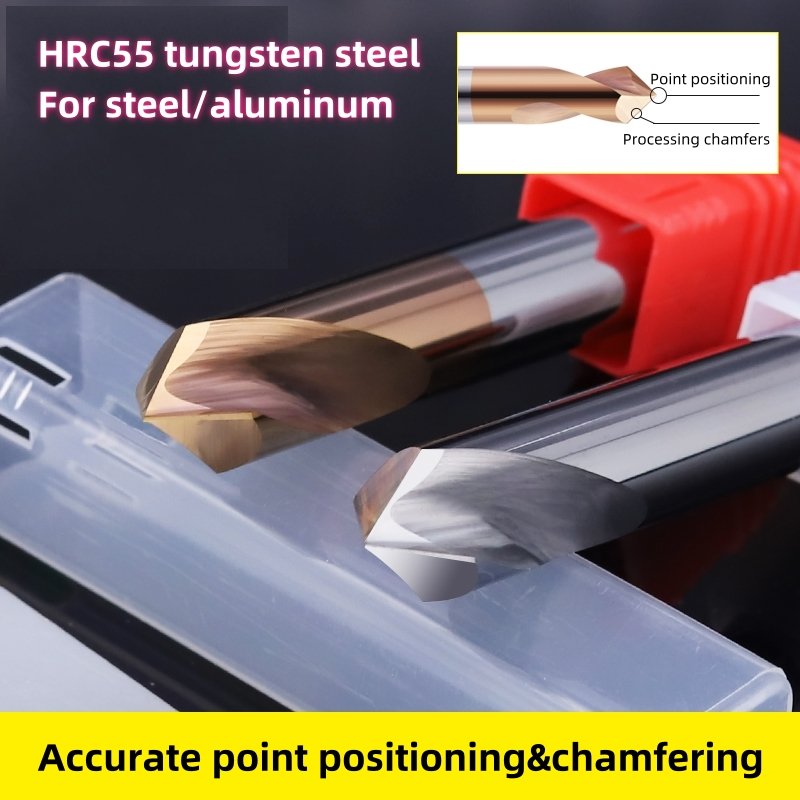
Chamfering is the most easily overlooked yet most effective machining step in improving finish. Correct chamfering angles and depths not only enhance safety but also make assembly smoother and the appearance neater.
Features: Chamfers and bevels edges on workpieces, avoiding sharp corners.
Common Applications: Shape finishing, beveling hole edges, deburring.
5.Corner Radius
Round nose end mills effectively disperse cutting forces, reduce tip breakage, and extend tool life. They are particularly suitable for machining hard materials or high-precision corner areas.
Features: The tip has a small radius design to reduce stress concentration.
Common applications: Machining of mold corners, internal corners, and bevel finishing.